

It is one of the most common questions we hear from business owners. The website is dated. Enquiries have plateaued. A competitor has just launched something that makes yours look like a relic. The instinct is to rebuild. But the investment is significant, and the question is legitimate: does a website redesign actually translate into measurable return, or is it expensive cosmetic work dressed up as strategy?
The answer, supported by a growing body of 2026 data, is that it depends entirely on how the redesign is approached. A visual refresh delivers an average of 9 percent ROI over twelve months. A website redesign grounded in user experience and conversion strategy delivers an average of 41 percent ROI in six months. A full strategy-led rebuild, including UX research, conversion architecture, and SEO foundations, delivers an average of 68 percent ROI in nine months or less. The redesign itself is not the variable. The thinking behind it is.
Why Most Redesigns Underperform
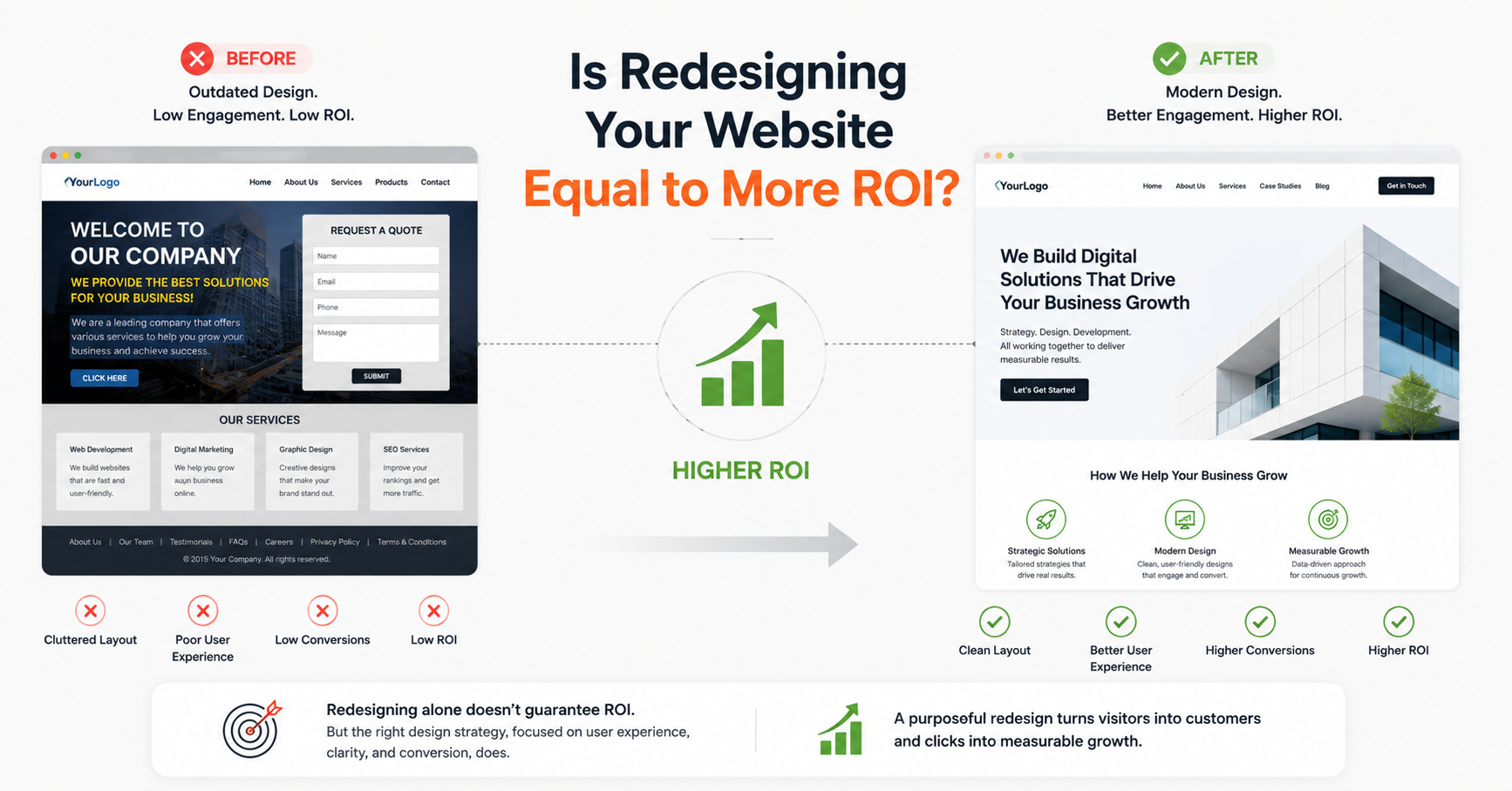
Industry research published in early 2026 found that two-thirds of completed website redesigns fail to meet the business expectations set before the project began. This is a striking number given the investment involved, and it points to a structural problem in how most redesigns are scoped.
The most common failure mode is treating a redesign as a visual project rather than a performance project. A new colour palette, a refreshed hero section, and updated photography can make a site look current without addressing any of the underlying reasons it was not converting. If the navigation logic was confusing before, it will likely still be confusing after, just presented in a more contemporary font. If the calls to action were buried or ambiguous, redesigning the layout around them does not solve the problem.
According to research on CRO-driven redesigns, businesses that align their redesign strategy with conversion rate optimisation see returns of up to 223 percent with lower risk than traditional approach-first projects. The difference is not the design itself. It is whether the design decisions were made to serve user behaviour and business outcomes or to satisfy internal aesthetic preferences.
A website redesign is not a brand exercise. It is a performance decision. The ROI follows from that distinction.
What the 2026 Data Says About ROI Timelines
For Sydney businesses evaluating the timing and scope of a website redesign, the trajectory of returns is as important as the magnitude. Based on 2026 redesign benchmarking data, a well-executed strategic redesign follows a predictable return curve:
- Within four weeks: bounce rate reduction of approximately 28 %, driven by load time and layout improvements.
- Within three months: lead volume increase of approximately 47 %from UX improvements.
- Within six months: conversion rate increase of approximately 32 % from conversion architecture changes.
- Within twelve months: organic traffic increase of approximately 68 % as SEO compounds
The businesses that see returns on the lower end of these ranges are typically those that redesigned for aesthetics. Those that see returns at the upper end redesigned for behaviour: mapping out how their specific audience navigates and decides, and building the site architecture around those findings rather than around what looked appealing in a mood board.
One further data point worth noting for Australian context: a 2026 case study cited by Wolf IQ’s redesign research found that a $150,000 AUD investment in a strategic rebuild generated $600,000 in annual incremental revenue, representing a 300 percent first-year ROI. These are not typical outcomes for every business, but they illustrate what is possible when the redesign is treated as a revenue instrument rather than a design project.
The Sydney and Australia Cost Picture in 2026
Understanding ROI requires understanding investment. For businesses researching website making cost in Sydney, the local pricing landscape in 2026 is broadly consistent with what Australian industry guides report. According to Velacore’s 2026 Australia website redesign cost guide, redesign costs in Australia range from $5,000 AUD at the lower end for template-based work to $40,000 AUD and above for custom builds with full UX research and development. Sydney-based agencies typically sit 20 to 30 percent above national averages due to higher operating costs and market demand.
For most Sydney small to medium businesses, a professionally executed redesign with strong UX foundations sits in the $10,000 to $25,000 AUD range. At the lower end of that range, the payback period on a strategy-led project with a 30 percent conversion improvement is typically three to six months. At the higher end, it extends to nine to twelve months, assuming a conservative traffic baseline and a modest starting conversion rate.
The variables that most affect this calculation are traffic volume (higher existing traffic means a conversion improvement compounds faster), the gap between current and achievable conversion rates (a site converting at 0.5 percent has far more room to improve than one at 3 percent), and the average revenue value of a converted lead in the business’s specific industry.
The real cost of a website is not what you pay to build it. It is what it costs your business every month it fails to convert.
When a Redesign Is the Right Decision and When It Is Not
Not every underperforming website needs a full rebuild. This is an important distinction that credible website redesign services providers should be willing to make honestly, even when it means recommending a smaller scope. According to Storm Brain’s redesign ROI analysis, if 70 percent or more of a site’s structure and content is salvageable, a targeted conversion optimisation sprint typically delivers faster ROI with lower risk than a full rebuild.
A full redesign becomes the appropriate decision when three or more of the following conditions apply:
- The site was built more than three to five years ago and has not been substantially updated
- Mobile performance is fundamentally broken and cannot be resolved through minor fixes
- The technology stack is outdated, creating security vulnerabilities or preventing necessary integrations
- Brand positioning has shifted significantly since the site was built and the current version contradicts current messaging
- Conversion rates are below industry benchmarks (typically 2 to 5 percent for most Australian SMBs) despite optimisation attempts
- Competitors have raised the design and experience bar to a point where the current site signals a tier below where the business actually operates
When fewer than three of these apply, a partial refresh or conversion-focused sprint is usually the smarter investment. When more than three apply, continuing to patch an underperforming site is often more expensive in lost revenue than the redesign itself.
The Accessibility Factor That Most Sydney Businesses Are Overlooking
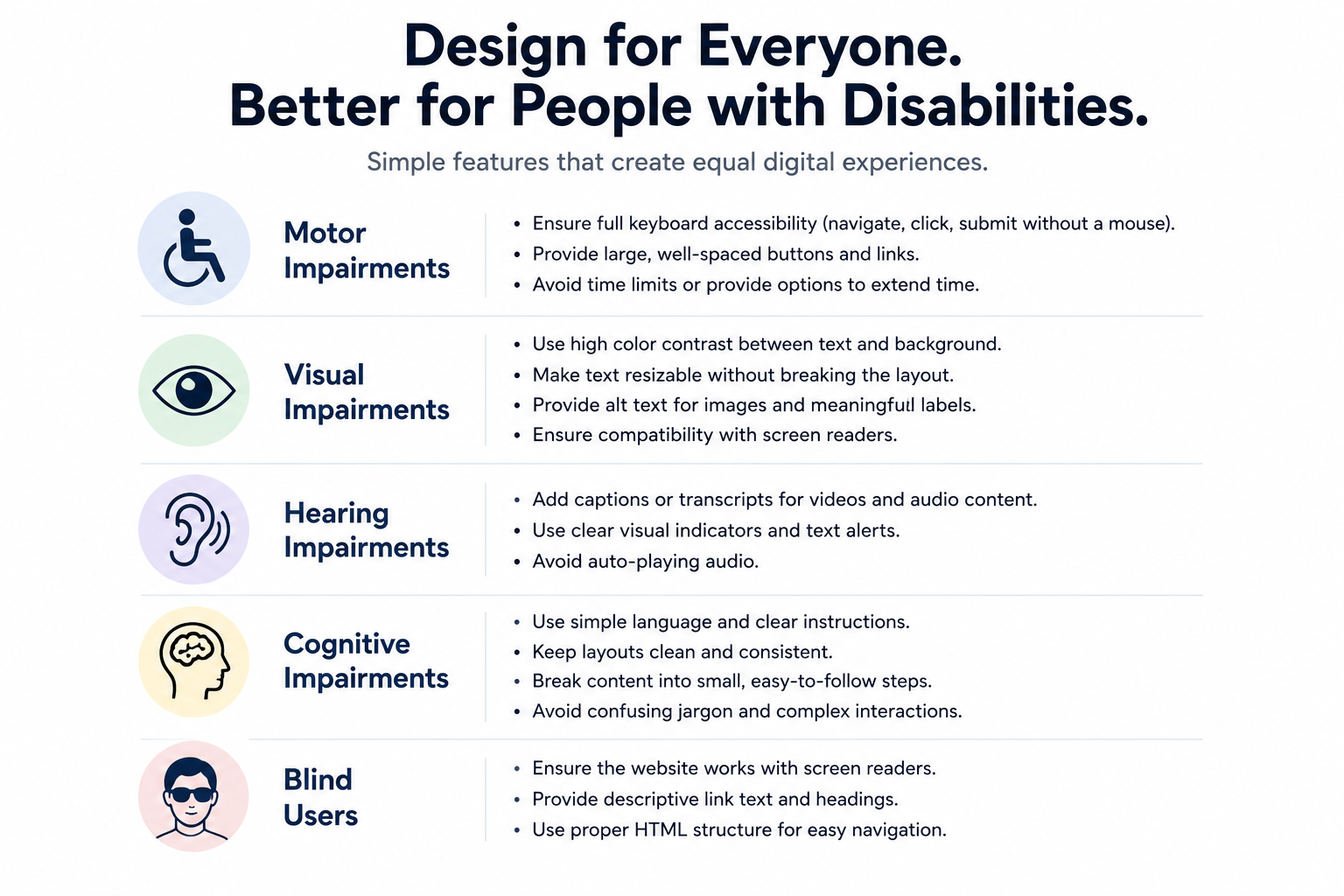
One dimension of the redesign ROI conversation that receives less attention than it deserves is website accessibility. In Australia, the Disability Discrimination Act 1992 (DDA) makes it unlawful to discriminate against people with disabilities in the provision of goods and services, which explicitly includes websites. The Australian Human Rights Commission updated its digital accessibility guidelines in April 2025, formally adopting WCAG 2.2 Level AA as the minimum standard. This applies to both government and private sector websites.
The commercial case for accessibility goes beyond legal compliance. Around 5.5 million Australians, roughly 21.4 percent of the population, live with a disability. A website that cannot be navigated by screen readers, that lacks sufficient colour contrast, or that cannot be operated by keyboard alone is excluding a significant portion of potential clients before they have had the opportunity to engage. Industry data from Level Access found that 75 percent of organisations that address accessibility report it contributes directly to improved revenue.
For Sydney businesses currently running a redesign brief, WCAG 2.2 Level AA compliance is not an optional enhancement. It is a legal baseline and a commercial opportunity that most competitors have not yet addressed.
What Ongoing Management Delivers That a One-Time Redesign Cannot
One of the most common mistakes businesses make after investing in a redesign is treating the launch as the finish line. A website is not a static asset. It is a living system that requires ongoing attention to maintain and improve its performance. This is where website management services Sydney represent a fundamentally different kind of investment than the redesign itself.
Post-launch management includes ongoing conversion testing, content updates aligned with SEO performance data, Core Web Vitals monitoring, security patches and plugin updates, and behavioural analysis through tools like heat maps and session recordings. Without this, a redesigned site will typically begin to underperform within twelve to eighteen months as search algorithms update, competitors iterate, and user expectations continue to rise.
The businesses with the strongest long-term ROI from their web investment are those that treat the redesign as the beginning of a performance programme rather than the conclusion of a design project. The design creates the foundation. Ongoing management is what compounds the return.
Choosing a Website Development Agency in Sydney
For businesses ready to move forward, the choice of partner matters considerably. The diagnostic question to ask any website development agency Sydney is whether they begin with strategy or with design. An agency that leads with visual concepts before conducting UX research, reviewing analytics, or mapping user behaviour is likely to produce a site that looks right rather than one that performs.
A credible agency will insist on establishing pre-redesign baselines: current conversion rates, traffic sources, bounce rates by page, and mobile versus desktop performance splits. Without these baselines, it is impossible to measure ROI post-launch, and impossible to make data-informed decisions during the design process. They will also have a position on SEO migration, specifically how the redesign will protect and build on existing organic rankings rather than inadvertently undermining them during the transition.
The ROI formula for a website redesign is straightforward: (Incremental Revenue Gained minus Total Project Cost) divided by Total Project Cost, expressed as a percentage. What makes it complicated is defining the inputs accurately before the project begins. A good agency helps you do that calculation before you sign a contract, not after.
The Question Worth Asking Before You Spend Anything
Before committing to a website redesign, the most useful question is not ‘what should our new site look like?’ It is ‘what is our current site costing us by staying the same?’ That reframe changes the entire project. It moves the conversation from aesthetics to performance, from creative preference to commercial outcome, and from a one-time expense to a measurable investment with a calculable return.
If your conversion rate is below two percent, your mobile experience is broken, your site is more than four years old, or your competitors have visibly raised the standard of their digital presence, the cost of doing nothing is almost certainly higher than the cost of redesigning strategically. The data supports that conclusion clearly.
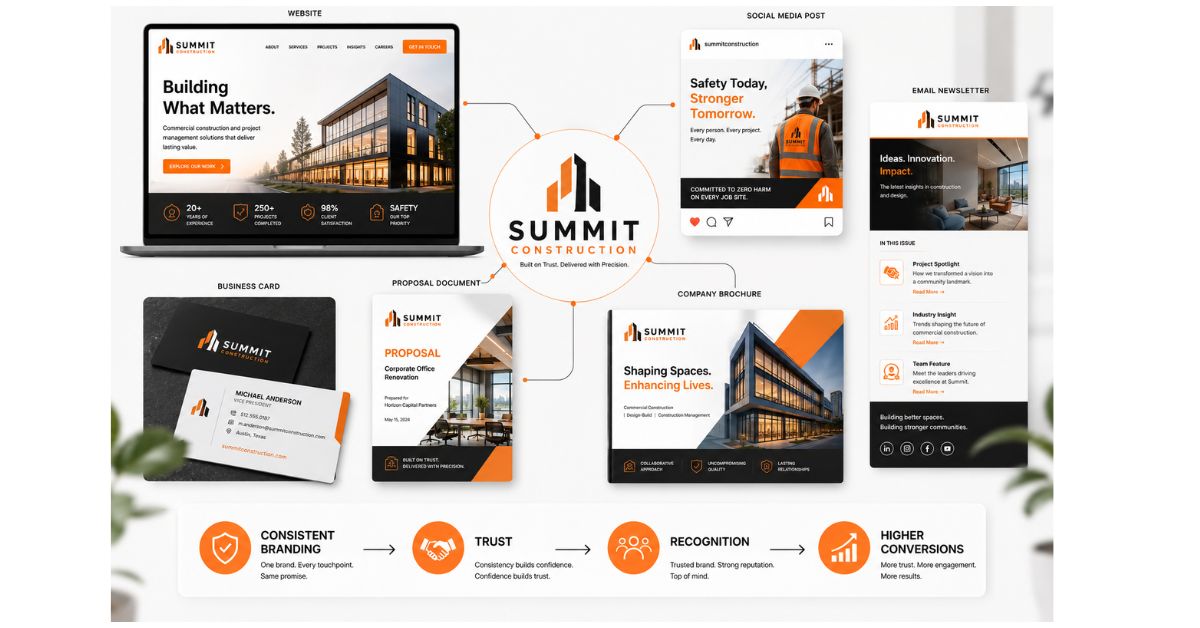
If you want to understand what your current site is actually costing you and what a strategy-led redesign could return for your specific business, we would be glad to consult with our team today. You can also read our related piece on why consistent branding across every touchpoint increases conversion rates, which addresses the design and trust layer that sits beneath any redesign decision.
Website: https://bixeldesign.com.au/contact/
Email: divya@bixeldesign.com.au